
Antique Map of Bath by Thomas Moule, c.1836–48
Back to: Somerset | Antique City Plans | Antique Maps of Bath
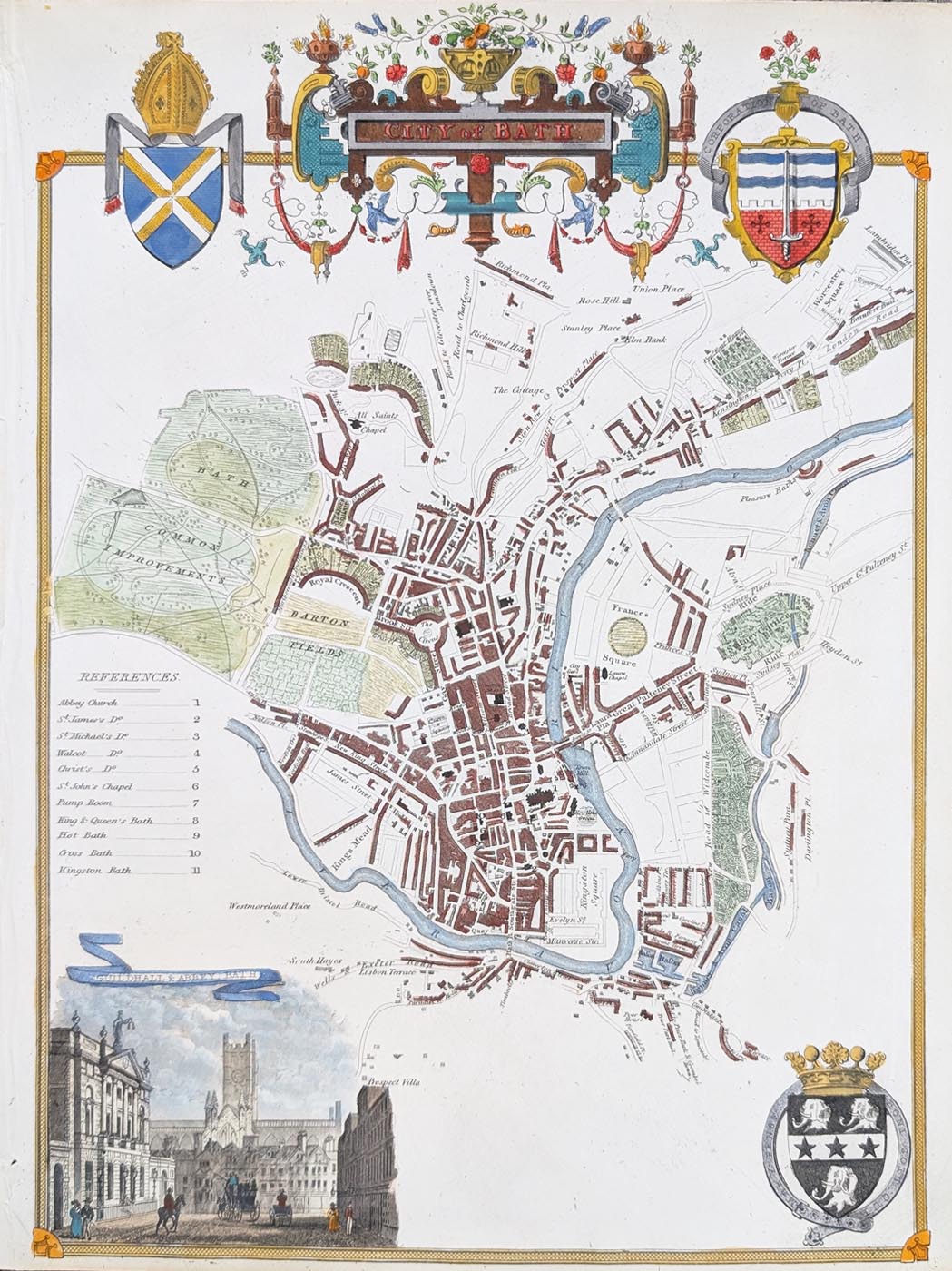
This attractive antique map of Bath was engraved by Thomas Moule and published in Barclay's English Dictionary. The map presents the city in considerable detail and is particularly decorative, with engraved views or vignettes of Bath Abbey and the Guildhall, the River Avon, coats of arms, and a table identifying important buildings and the famous baths.
Printed as a steelplate line engraving, the map has been hand coloured and retains the distinctive decorative character associated with 19th-century maps of British towns and cities. Its combination of cartographic detail and architectural decoration makes it an appealing example for collectors of antique maps, Bath history and Georgian and Victorian topography.
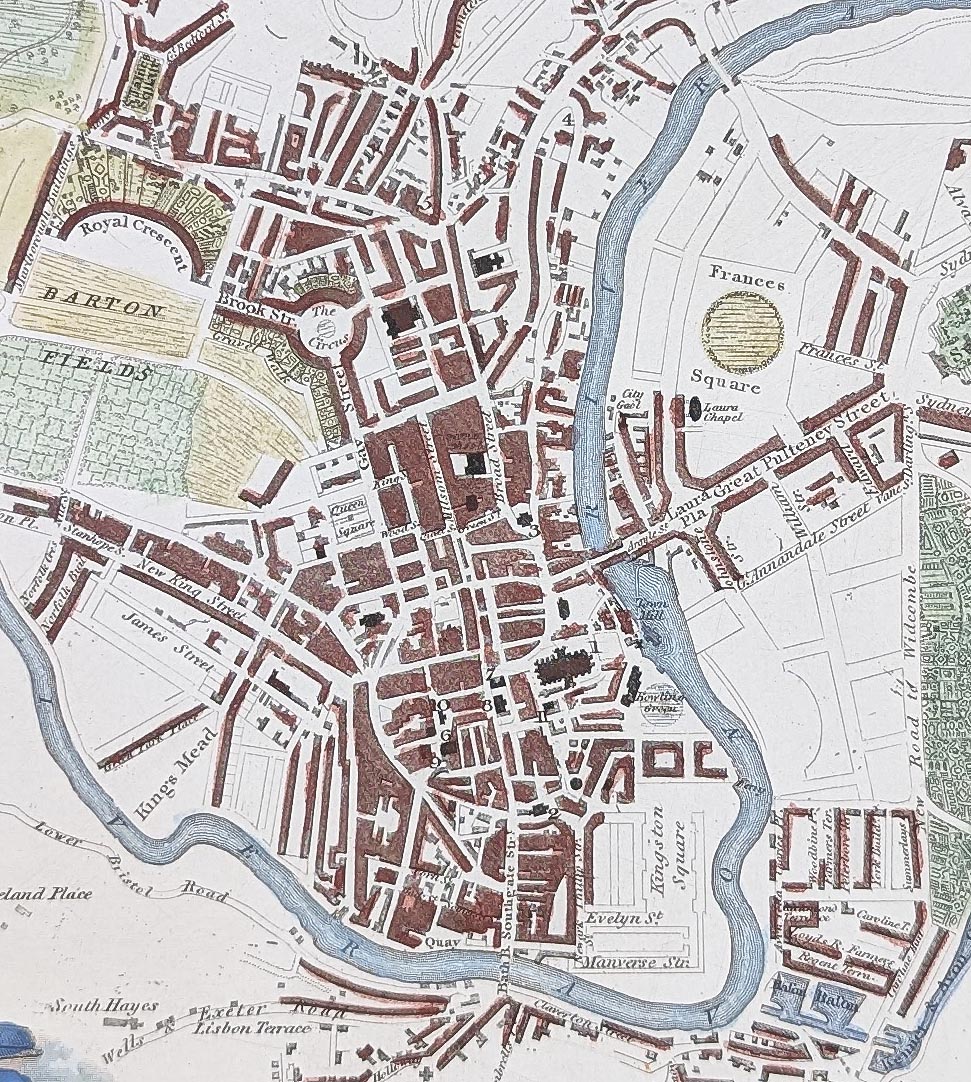
Detail of the city centre featuring the Royal Crescent, The Circus and Bath Abbey
Title: City of Bath by Thomas Moule
Publication: Barclay's English Dictionary
Date: c.1836-48
Condition: Bold imprint, later hand colouring, small margins as published.
Image size: 210 x 270mm
8.25 x 10.5 " approx.
£145.00
This original antique map of Bath is available to purchase unframed or with a choice of frames and glazing options.
Order No. 4992
Click here for framing suggestions
About Thomas Moule
Thomas Moule (1784–1858) was a British mapmaker and publisher particularly well known for his decorative maps of the English counties. His maps combined geographical information with heraldic decoration, illustrations and architectural features, giving them both practical and artistic appeal. Moule's work is now collected for its historical interest, decorative quality and insight into the appearance of British towns and counties during the 19th century. This was the last decorative county map atlas issued in the UK.
Features of this Antique Bath Map
- Decorative antique map of Bath by Thomas Moule Dating from approximately c.1836–48, subject to bibliographical verification
- Steelplate line engraving
- Later hand colouring
- Vignettes of Bath Abbey and the Guildhall
- Coats of arms and decorative details
- Table of references to important buildings and the baths
- Detailed depiction of Bath's streets, urban layout, and the River Avon
- A scarce and attractive example for collectors
The appeal of this map lies in the combination of historical information and decorative engraving. Rather than simply showing the street plan of Bath, it incorporates architectural illustrations, heraldic decoration and references to notable buildings and baths. These details make it particularly suitable for anyone interested in Bath's architectural history as well as for collectors of decorative 19th-century maps.
Mon - Closed
Tues-Fri 10am-1.30pm, 2.30-5.30pm
Sat 10am-1.30pm
© Devonshire Fine Art
 Free UK Mainland Delivery*
9 Church Street
Modbury
Devon PL21 0QW. UK
01548 830872


